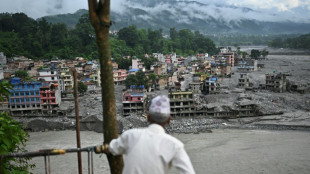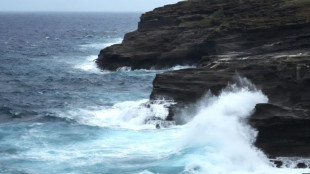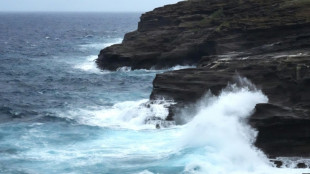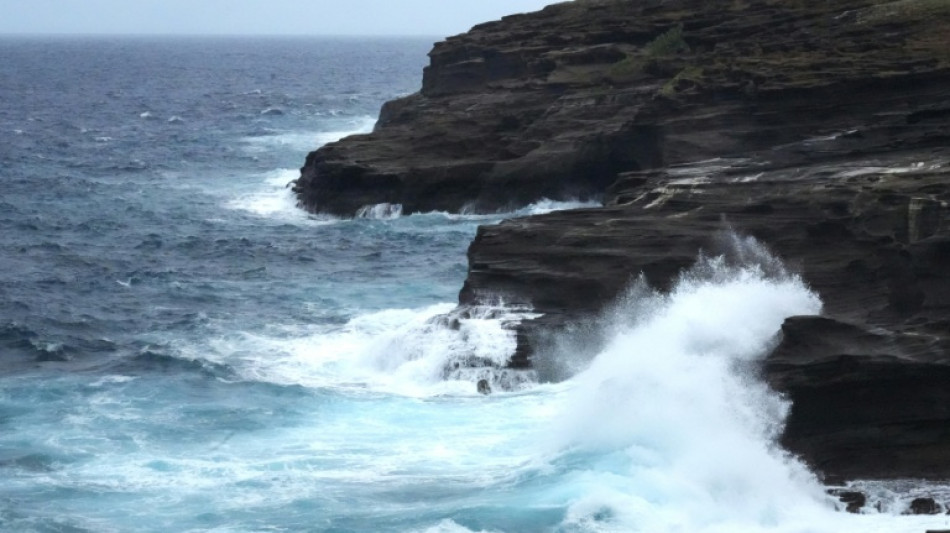
Hurricane Lowell lashes Hawaii's western islands / Photo: Michelle Bir - AFP
Hurricane Lowell lashed Hawaii with damaging winds, heavy rainfall and powerful floods, knocking out power for 91 percent of a western island as it pushed out further into the Pacific on Tuesday.
Overnight, the core of the Category 2 storm passed within just 40 miles and 60 miles, respectively, of the archipelago's two westernmost islands -- sparsely populated Niihau and Kauai, home to some 70,000 people.
Kauai Island Utility Cooperative reported power was out for 91 percent of customers, and "damage assessments will begin as soon as possible this morning depending on weather conditions. There is no estimated time of restoration for any outages at this time."
Further east, in the island of Oahu which is home to the capital Honolulu, there were more than 20,000 customers without power, according to Hawaiian Electric. "Customers" can refer to households, businesses and industry.
"Kauai emergency officials are urging all residents and visitors to stay off roadways and avoid unnecessary travel to allow first responders and emergency crews to continue operations and assess the widespread damage," the County of Kauai said in a statement.
"As the light comes up and the extent of the damage from Hurricane Lowell comes into focus, we want to ensure that no additional emergency situations arise unnecessarily," said Elton Ushio, Administrator of the Kauai Emergency Management Agency.
Earlier, residents of Kauai and Nihau were warned to watch for tornadoes -- though it was not immediately clear if these did in fact form.
Lowell packed sustained winds of around 110 mph during its closest approach, with predictions of rainfall of four to eight inches for Kauai producing the potential for significant flash flooding and mudslides.
Storm surge of two to four feet was expected to cause normally dry areas near the coast to be flooded by rising waters moving inland.
The storm briefly reached Category 5 strength last week.
Hawaii is still recovering from the impacts of Hurricane Lala, which grazed the southern part of the Big Island last month, bringing destructive winds and flash floods.
El Nino is the warming phase of a natural cycle in the tropical Pacific known as the El Nino-Southern Oscillation. It comes along every two to seven years.
The climate pattern promotes hurricane formation in the tropical Pacific while decreasing their likelihood in the Atlantic.
Climate change increases El Nino's global weather impacts, but it is not yet certain whether it increases the risk of stronger El Ninos.
F.Coineagan --NG