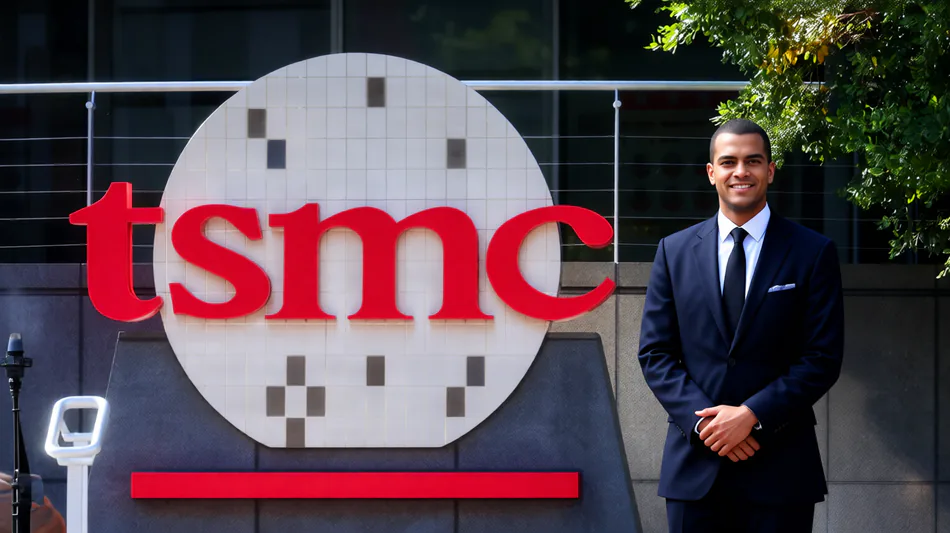
TSMC Denies Memory Market Entry Plans Amid Nvidia 3D DRAM Reports
Taiwan-based TSMC has dismissed rumors that it is preparing to enter the memory chip market, reiterating its commitment to its core foundry business. The clarification follows reports that the company began planning 3D DRAM production at the request of Nvidia, though TSMC did not confirm specific client requests or memory-related initiatives.
Taiwan-based TSMC, the world’s largest contract semiconductor manufacturer, has reaffirmed its commitment to logic semiconductors in response to growing speculation that it may enter the memory chip market. The company dismissed reports suggesting it is preparing to produce three-dimensional dynamic random-access memory (3D DRAM) at the request of Nvidia.
Foreign media outlets, including Bloomberg, reported on July 7 that a TSMC spokesperson stated the company "always focuses on its core business of semiconductor foundry." The spokesperson added that TSMC’s mission is to remain a trusted provider of technology and capacity to the global logic semiconductor industry. However, the statement did not specifically address whether Nvidia had made such a request or confirm any activities related to memory businesses like DRAM.
The speculation stems from a report by the tech outlet The Information, which claimed that TSMC began preparing a plan for 3D DRAM production under the leadership of Vice President Hsu Kuo-Jin. Hsu oversees TSMC’s advanced packaging operations and previously worked at Micron Technology. 3D DRAM is considered a next-generation technology that stacks memory cells vertically across multiple layers to increase storage capacity.
Reports also suggested that TSMC was considering building a dedicated memory fabrication plant or acquiring an existing semiconductor facility to convert it for memory production. Despite these rumors, TSMC has officially denied the reports. Nevertheless, the ongoing global memory shortage has prompted major technology firms, including Nvidia and Apple, to diversify their supply chains, keeping the focus on TSMC’s potential strategic moves.
If TSMC were to enter the memory segment while holding more than 90% of the advanced logic semiconductor market, it would occupy a unique position in the AI hardware supply chain. However, 3D DRAM technology still faces significant challenges before it can reach mass production. The three dominant memory manufacturers—Samsung Electronics, SK hynix, and Micron—are also actively developing similar technologies.
Foundry and memory manufacturing differ significantly in both technology and process. The tech outlet Thomson Hardware projected that TSMC’s entry into the memory market could affect its collaboration with partners such as SK hynix. Since 2024, TSMC has supplied high-bandwidth memory (HBM) logic base dies to SK hynix.
While a new supplier could emerge in a market currently dominated by the three major memory makers, Thomson Hardware noted that TSMC could face antitrust issues stemming from vertical integration. The company’s potential move would blur the lines between its role as a foundry and its relationships with existing memory partners.
T.M.Kelly--NG