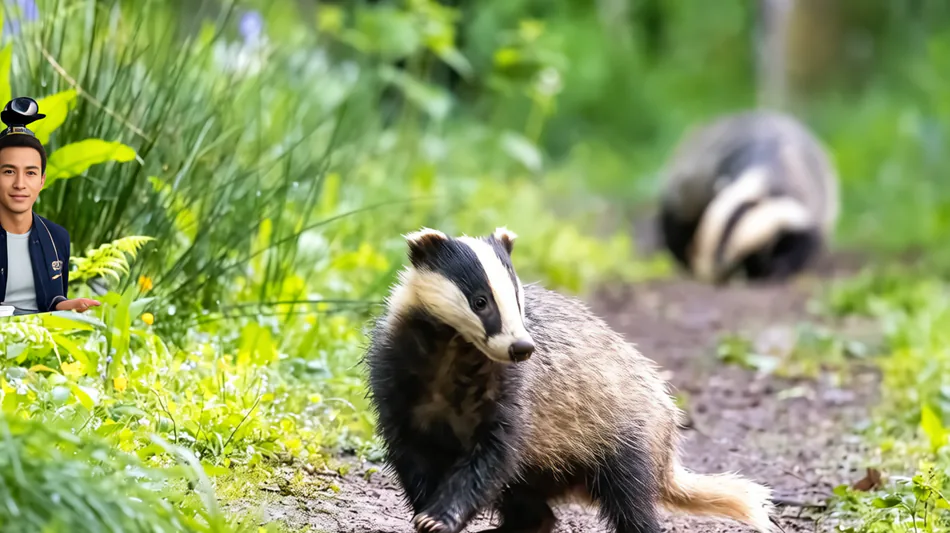
Green Groups Condemn Plan to Abolish Natural England and Environment Agency
A coalition of leading environmental organizations has condemned the government’s proposal to abolish Natural England and the Environment Agency, labeling the move as a dangerous attempt to scapegoat nature for housing delays. Critics argue the plan contradicts previous policy and ignores official analysis showing environmental protections are not significant barriers to development.
A coalition of leading environmental charities has condemned the UK government’s proposal to abolish Natural England and the Environment Agency, describing the plan as a politically motivated attempt to scapegoat nature for delays in construction projects. The move, announced by Louise Haigh, the de facto deputy prime minister, aims to increase political control over planning decisions but has drawn sharp criticism from experts who argue it ignores evidence that environmental protections are not significant barriers to development.
Haigh stated on Monday that the two bodies were being reviewed as part of a wider shake-up of quangos, or arm’s length bodies. Ministers are considering abolishing these entities to give politicians greater control over what gets built and where. However, this proposal appears to contradict previous government policy, which positioned Natural England at the heart of planning reforms designed to boost growth and deliver 1.5 million new homes by the end of the current parliament.
In an open letter, a coalition including the RSPB, Wildlife Trusts, National Trust, and the British Trust for Ornithology criticized the abolition of Natural England as a costly mistake. The groups warned that removing the regulator would leave the country more exposed to fire, flood, drought, and wildlife extinctions. "It would shake the credibility of any government claiming to care about our natural world," they wrote.
Announcing the proposals, Haigh repeated disputed allegations that nature and its regulations were blocking development. Addressing business leaders, she argued that over decades, politicians had ducked accountability by delegating responsibility to a "sprawling web of regulators and arm’s length bodies." She claimed there were more than 20 statutory consultees with veto power, bound only notionally by deadlines, and that obfuscation had become normal.
"As part of rewiring the state, we will reform arm’s length bodies to increase public control," Haigh said. "We will look at each of their functions and pose the challenge: what should be devolved, what can be dissolved and what can be delivered by departments? We’ve already begun that process with the Environment Agency, Natural England, Ofwat and the Drinking Water Inspectorate."
Despite these claims, the government’s own analysis indicates there is little evidence that nature acts as a block to development. Sally Hayns, chief executive of the Chartered Institute of Ecology and Environmental Management, stated that scapegoating nature would not help Britain build. She noted that government impact assessments had found "very limited" evidence that environmental protections hold back development.
Hayns argued that nature is an essential resilience tool, making homes cooler during heatwaves, safer from flooding, and surrounded by the green spaces people desire. "Scapegoating nature, and those that work to protect it, won’t get Britain building," she said.
Natural England has frequently been at the center of cultural and political controversies. Most recently, it was wrongly accused of planning a cull of Dartmoor ponies, a claim promoted by figures on the political right. The body regulates and oversees more than 5,000 of the most protected natural sites in England, which are home to threatened species such as nightingales, woodpeckers, and long-eared owls. Its role includes advising on how proposed developments affect biodiversity, geodiversity, landscapes, soils, access, and protected sites or species.
Tony Juniper, chair of Natural England, defended the organization’s record, stating that it had helped speed up building by reviewing rules protecting bats and newts. "A healthy natural environment is vital for economic development and at Natural England we are very proud of all the work we have done during recent years to unite our national ambitions for growth while achieving nature’s recovery," Juniper said.
Critics pointed out that even if the bodies were abolished, their legal duties would still need enforcement. Haigh suggested ministers might take on these roles or devolve them, but environmental groups condemned the prospect of political control over such a significant regulator.
"Our rivers should be a cautionary tale," the coalition said in their letter. They argued that political interference in regulation had led to chronic underinvestment in water and sewerage infrastructure and repeated ministerial authorization to use toxic chemicals against independent advice, resulting in years of contamination.
Craig Bennett, chief executive of the Wildlife Trusts, highlighted a long-standing pattern of political rhetoric against environmental protections. "For over 16 years, politicians have been claiming that the regulations and regulators who protect English wildlife are some sort of obstacle on a path to prosperity," he said. "They are not. For over 16 years, protections have been chipped away and the woods, meadows, skylarks and hares they protect are suffering a death by a thousand cuts."
Many of Haigh’s proposals align with recommendations from a report by Jon Cunliffe last year, which suggested replacing Ofwat with a new super-regulator that would absorb powers from Natural England and the Environment Agency.
While Natural England and the Environment Agency have faced criticism from environmentalists for being too weak due to years of budget cuts, experts argue that abolition is not the solution. Richard Benwell, chief executive of Wildlife and Countryside Link, stated: "The answer is to restore its effectiveness, not abolish it. Scrapping the regulator would be scapegoating, not reform. A government serious about growth and environmental security should welcome independent scrutiny, not fear it."
X.Fitzpatrick--NG