Iran says deal to end Mideast war 'declaration of US defeat' / Photo: Anwar AMRO - AFP
Iran called the deal it struck to end the Middle East war "a declaration of America's defeat" on Wednesday, as the top US diplomat kicked off a tour of Gulf countries hit hardest by Tehran.
The war that began with a massive US-Israeli campaign of strikes against Iran on February 28 ended with the Islamic republic striking an agreement its leaders have sought to portray as a victory.
The conflict sowed chaos in the region, with Tehran retaliating against its foes by blockading a key waterway for energy shipments and launching thousands of drones and missiles at its Gulf neighbours.
The US and Iran signed the agreement last week and launched a process aimed at reaching a permanent settlement -- with the Islamic republic's leadership transformed but the system of rule firmly in place.
"The Islamabad understanding was not the result of pressure and coercion, but rather the result of the resistance and authority of the brave Iranian nation," Iran's top negotiator Mohammad Bagher Ghalibaf said Wednesday of the deal, which was finalised through Pakistan's mediation.
"That is why, the Islamabad Memorandum of Understanding became a declaration of America's defeat," he said, adding that security in the Middle East must be ensured by the countries of the region.
The US maintains several military bases across the Middle East, notably in the Gulf where US Secretary of State Marco Rubio kicked off a tour on Wednesday in a bid to reassure allies.
- 'Coexistence' -
Rubio arrived in the United Arab Emirates on Tuesday and was scheduled to hold closed-door talks with its leader, Sheikh Mohamed bin Zayed, before flying to Kuwait and then Bahrain, where he will attend a Gulf Cooperation Council meeting.
Rubio said he intended to discuss the US-Iran memorandum of understanding with Gulf leaders, which does not address Iran's missile programme and proxies -- two long-standing concerns for Gulf nations and Israel.
He insisted that no country is allowed to impose tolls on the Strait of Hormuz after Oman and Iran, which border the waterway, said they were considering charging "costs" for navigating the key exit route for Gulf oil and gas.
"It's an international waterway," he said as he arrived in Abu Dhabi, repeating a position the US has stated throughout the war.
"No country is allowed to charge tolls or fees on an international waterway. That's existing international law."
But Iran was defiant, appearing to insist that the Gulf nations might do better by aligning themselves with the Islamic republic instead of with the West.
"We see the future of the region not in confrontation but in interaction and not in elimination but in coexistence," Ghalibaf said.
Iran's chief negotiator also reiterated that peace in Lebanon, which was drawn into the war when Tehran-backed Hezbollah launched attacks on Israel, was a fundamental pillar of reaching a definitive agreement with the US.
"For us, the ceasefire in Lebanon has been and is as important as the ceasefire in Iran, and the end of the war in Lebanon has been as important as the end of the war in Iran," Ghalibaf said.
- 'Like the phoenix' -
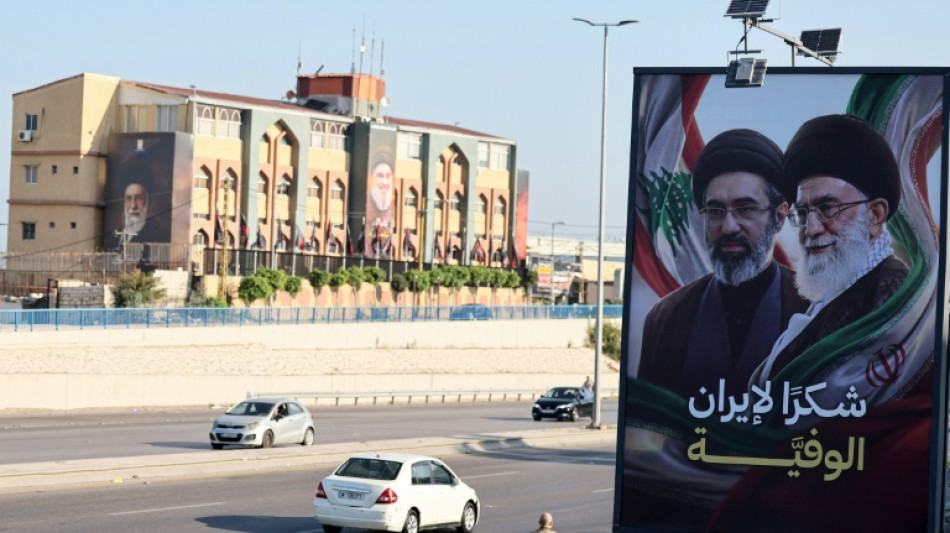
In Lebanon, where Iran insisted a fragile ceasefire now in place was a precondition for a broader agreement, people in areas worst affected by Israeli bombing were struggling to clear rubble from their streets.
In the beachside city of Tyre, 40-year-old Hussein Hassan told AFP he had fled with his family to north Lebanon during the war but returned this week to reopen his barbershop.
Tyre residents "love life and work. We shake off the dust and rise up again like the phoenix", he said proudly, while welcoming customers to his shop, one of its walls cracked and its glass facade blown away.
"Even if there are a dozen wars, we'll come out from under the rubble... and get back to work," he said.
The push by Iran's leaders to portray the agreement with the US as a win was also directed inwards, with some factional divisions and opposition to talks existing within the hierarchy.
Analysts say, however, that such splits will not suffice to derail the negotiating process.
"There are certainly factions seriously opposed to the talks and to any compromises with the US," said Yale University lecturer Arash Azizi.
"But it is my assessment that they currently lack the institutional power necessary to block the talks or even do much to shape their outcome."
Pakistan said Wednesday that technical talks will resume next week.
"I presume on Tuesday," foreign ministry spokesman Tahir Andrabi told journalists in Islamabad, adding next Monday or Wednesday were also possible dates.
One of the key sticking points has been Iran's nuclear programme, long a source of friction with Western powers who suspect Tehran is building a bomb, a claim it has systematically denied.
US President Donald Trump said Tuesday that Tehran had "fully and completely agreed" to allow United Nations inspectors to return to the country, but Iran said it has no intention of doing so.
On Wednesday the head of the UN's nuclear watchdog said inspections of Iranian nuclear sites were "going to happen".
"Whether this happens today after tomorrow or in one week or in 10 days, it's important but not essential. This is going to happen," said Rafael Grossi, head of the International Atomic Energy Agency.
Y.Urquhart--NG