Possible Trump rescue of Spirit Airlines spurs debate / Photo: Patrick T. Fallon - AFP/File
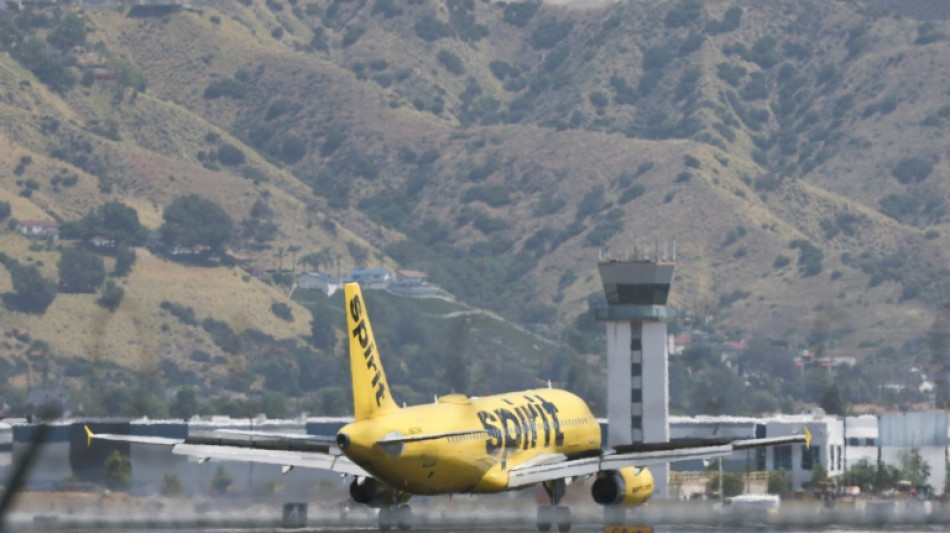
Bargain US carrier Spirit Airlines, which filed for bankruptcy in 2025 for the second time in a year, could be spared by a controversial potential White House rescue package.
Trump confirmed on Thursday that he was hoping Spirit could be saved, sparing thousands of jobs.
"I think we'd just buy it," Trump said in the Oval Office. "They have some good aircraft, have good assets, and when the price of oil goes down, we'll sell it for a profit."
Trump's administration has been working on a potential $500 million package for the embattled airline, US media have reported in recent days.
Under a potential plan being discussed, the US government would make a loan to Spirit and receive warrants to take a large stake in the carrier, the Wall Street Journal reported.
Spirit had announced on February 24 an "agreement in principle" to restructure its debt with creditors, saying it expected to emerge from bankruptcy by early summer.
But only days later, the US-Israel alliance launched attacks on Iran, leading to a spike in oil prices.
That translated into a surge in jet fuel prices that proved to be "the straw that broke the camel's back," said Jan Brueckner, emeritus economics professor at the University of California, Irvine.
Jet fuel prices have more than doubled since the February 28 start of the war, prompting major US airlines to lower their profit forecasts, trim back on capacity growth plans or both.
As a no-frills carrier, Spirit adds pressure on larger airlines, which have responded with bare-bones "basic economy" offerings, according to Brueckner.
"It's beneficial to preserve this type of competitive airline that helps keep fares low," Brueckner said.
- 'Socialist Donald Trump' -
While a package sparing Spirit may benefit consumers, the potential solution has sparked blowback.
Critics include Arkansas Republican Senator Tom Cotton, who called the plan "not the best use of taxpayer dollars" in a post on X.
"If Spirit's creditors or other potential investors don't think they can run it profitably coming out of its second bankruptcy in under two years, I doubt the US government can either," Cotton said.
Tad DeHaven, a policy analyst at the Cato Institute, a free-market think tank, called the White House proposal a "mistake," ruing a solution based around "politically engineered financing."
The US bankruptcy process should move forward "whether that means reorganization, liquidation, or asset sales to other companies," DeHaven said in a blog post.
"That outcome may be less tidy, but it's still preferable to quasi-nationalization."
Other critics include Colorado Governor Jared Polis, a Democrat.
"Now socialist Donald Trump is nationalizing the airlines," Polis said on X. "What industry will the government take over next under his socialist regime?"
While the US government has provided direct relief to companies before, such cases have tended to be sector-wide and crisis-related, such as support packages for automakers and banks during the 2008 financial crisis.
Even in these circumstances, such moves have been political controversial.
But Trump has tested US norms resisting government stakes in businesses, announcing ventures that give Washington shares in semiconductor company Intel and rare earth company MP Materials, among others.
The White House has argued that these are strategic sectors for the country.
Trump administration officials have also criticized predecessor Joe Biden's administration, which successfully blocked a proposed $3.8 billion takeover of the carrier by JetBlue, arguing it would harm consumers.
"I understand the airline is bankrupt because the previous administration blocked the merger, which was probably not a wise move," White House spokeswoman Karoline Leavitt said earlier this week.
Economist Brueckner said airlines face sharper pressures due to the Iran war "and the administration chose to initiate the War, and therefore they may feel some need to shelter companies from the consequences of the war."
Y.Byrne--NG