Tehran receives US plan to end Mideast war, as Iran fires at US carrier / Photo: - - AFP
Iran has received a 15-point plan from the United States to end the Middle East war, Pakistani officials said Wednesday, raising hopes for a diplomatic solution even as Iran said it have fired a volley of cruise missiles at a US aircraft carrier.
A conflict that began on February 28 with a US-Israeli bombing campaign on Iran has rapidly engulfed the entire region, sending oil prices skyrocketing and threatening to derail the global economy.
US President Donald Trump has repeatedly claimed progress in talks with Iran in recent days, even though Tehran has denied any negotiations were taking place.
But fledgling diplomatic activity appeared to be gaining momentum after two senior officials in Islamabad told AFP that American proposals to stop the fighting had been "conveyed to Iran" through Pakistani intermediaries.
Pakistan is being touted as a possible mediator given its longstanding ties with both neighbouring Iran and the United States, as well as close contacts in the region.
Even so, there was no let-up in the military activity, with targets in Iran, Israel, Lebanon, Bahrain, Kuwait, Jordan and Saudi Arabia all coming under fire.
Iran's military said its cruise missiles fired at the USS Abraham Lincoln carrier group had "forced it to change its position", warning of "powerful strikes" when the "hostile fleet" comes into range.
US ally Israel, meanwhile, said it had struck targets in Tehran as well as a submarine development facility in the central city of Isfahan.
From the Iranian capital, 40-year-old Shayan told AFP: "There is gasoline, water and electricity. But there is a sense of helplessness in all of us. We don't know what to do and there's really nothing we can do."
- 'Our heart is here' -
On another front, Israeli warplanes pounded the southern suburbs of Beirut, a stronghold of Iran-backed militant group Hezbollah.
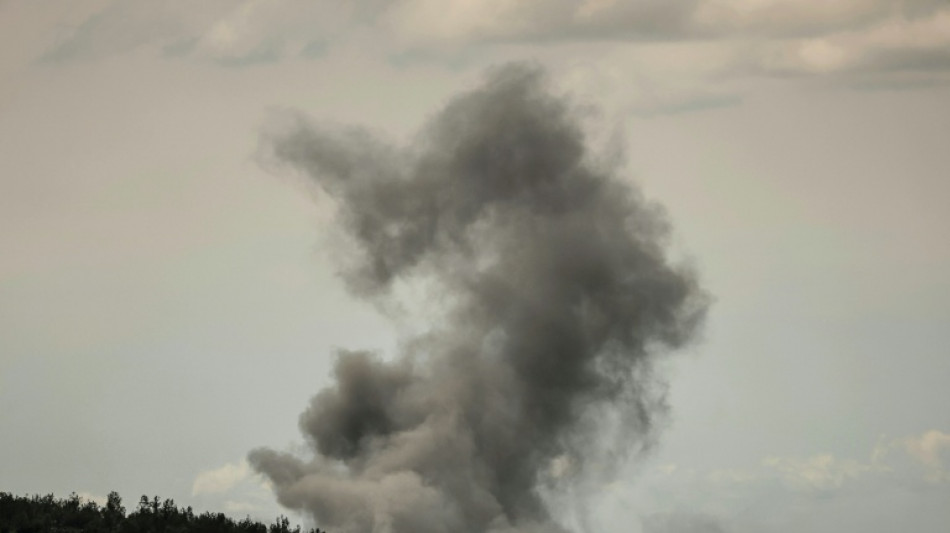
An AFP correspondent saw a street covered in shattered cement and warped metal after the early morning strike, while an apartment building's upper floors appeared damaged.
Lebanon was pulled into the war when Hezbollah began firing rockets into Israel on March 2 to avenge the killing of Iran's supreme leader Ayatollah Ali Khamenei.
According to Lebanese authorities, more than 1,000 people have been killed in over three weeks of Israeli strikes and upwards of one million people displaced.
In the southern Lebanese city of Tyre, almost cut off from the rest of the country by bombs, Khalil, a man in his 30s, voiced his defiance.
"They'll have to take us by force," he told AFP.
Despite Israeli ground operations and the spectre of a full-blown invasion, "we don't want to leave our land... our heart is here", said Khalil, sheltering with his young family in a theatre.
- Behind-the-scenes diplomacy -
Diplomatically, the two sides offered conflicting accounts, even though mediators in the region said work was ongoing behind the scenes to relay messages.
"There is hope but it's too early to be optimistic," said a diplomatic source in the region, who requested anonymity to discuss sensitive issues.
Both sides need to be able to climb down without losing face, the source noted.
In public, Iran kept up its belligerent rhetoric, with the speaker of Iran's parliament, Mohammad Bagher Ghalibaf, warning the US: "Do not test our resolve to defend our land."
According to Israel's Channel 12, Trump's proposals include a ceasefire during which the sides would discuss a 15-point agreement that would include a ban on Iran enriching uranium on its soil and the reopening of the vital Strait of Hormuz oil route.
Iran in turn would see sanctions relief, according to the report. The Trump administration similarly offered a 15-point plan before a shorter Israeli and US bombing campaign against Iran in June.
Iran had agreed in 2015 to broad restraints on its contested nuclear program in a deal that Trump ripped up during his first term as he joined Israel in applying pressure to the cleric-run state.
- 'Unbelievable price' -
Stocks rose and oil prices tumbled on signs of a possible de-escalation, but focus remained on the Strait of Hormuz, through which one fifth of the world's oil passes.
Trump told reporters in the Oval Office on Tuesday that Iran had given him "a very big present worth a tremendous amount of money", which he said demonstrated that "we're dealing with the right people".
The US president did not elaborate further but said it was related to the Strait of Hormuz, which Iran has largely blockaded in retaliation for US and Israeli strikes.
Tehran, in a message circulated by the International Maritime Organization (IMO), assured safe passage through the strait to "non-hostile vessels".
However, the IMO also cited a statement from Iran's foreign ministry as saying no passage would be granted to vessels belonging to "the aggressor parties -- namely the United States and the Israeli regime".
On a visit to Tokyo, the head of the International Energy Agency said he was ready to approve the release of more oil reserves if needed to cushion the war's impact on global supplies.
But the effects are already visible around the world, with Sri Lanka ordering an extra day off work to conserve energy and the price of diesel doubling in Vietnam.
Hanoi resident Nguyen Van Chi said on Wednesday he had not driven his truck in the past two weeks, instead opting to cycle.
"With this unbelievable price of diesel, I cannot even sell my truck as no one is going to use it," the 54-year-old businessman told AFP.
burs-mfp/dc
M.Sullivanv--NG