White House pressure on Cuba mounts as island fights power cut / Photo: Jim WATSON - AFP
Washington heaped pressure on Cuba's communist authorities Tuesday to allow free-market reforms as the impoverished island scrambled to recover from a nationwide electricity blackout.
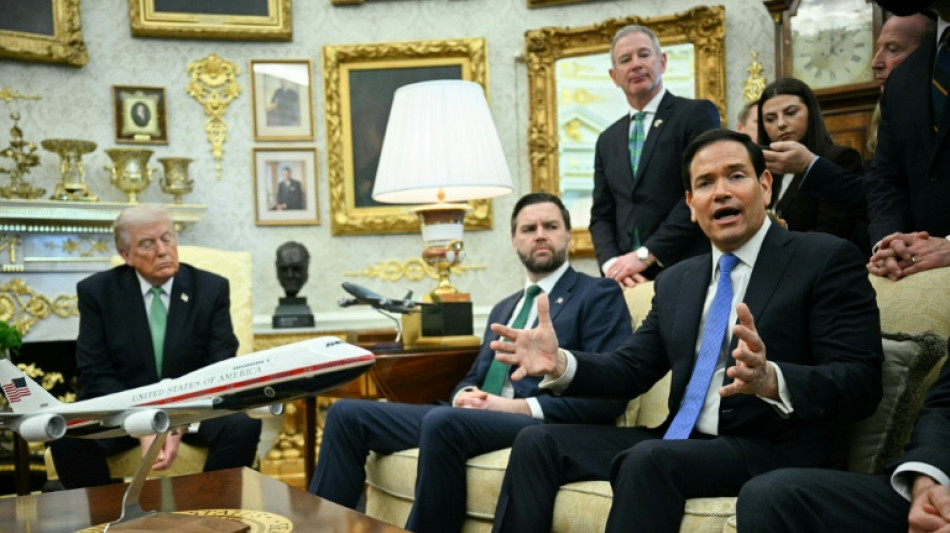
US Secretary of State Marco Rubio said Cuba's decision announced this week to let exiles invest and own businesses did not go far enough.
"What they announced yesterday is not dramatic enough. It's not going to fix it. So they've got some big decisions to make," Rubio, a Cuban-American and vociferous critic of the country's ruling party, told reporters at the White House.
President Donald Trump, who just Monday had said he would "take" Cuba, added: "We'll be doing something with Cuba very soon."
Cuba's authorities are under increasingly crushing pressure, with Washington enforcing an oil blockade and openly stating it wants to end the nearly seven-decades-old US standoff with the one-party communist state.
Cuba is open to broad talks with Washington and allowing more investment, but it will not discuss changing its political system, an envoy told AFP on Tuesday.
Tanieris Dieguez, Cuba's deputy chief of mission in Washington, said the two neighboring countries "have a lot of things to put on the table" but that neither should ask the other to change its government.
"Nothing related with our political system, nothing with our political model -- our constitutional model -- is part of the negotiations, and never will it be part of that," she said.
"The only thing that Cuba asks for any conversation is respect to our sovereignty and to our right to self-determination."
The New York Times, quoting unnamed US officials, said the Trump administration has called for Cuba to sack President Miguel Diaz-Canel, who is seen as resistant to change.
- 'Taking Cuba' -
A total electricity breakdown Monday underscored the parlous state of Cuba's economy. The country lost Venezuela as its chief regional ally and oil supplier this January after a US military operation toppled Venezuela's socialist leader Nicolas Maduro.
Power was restored to two-thirds of the country early Tuesday, including to 45 percent of the capital Havana, home to 1.7 million people.
"What we fear all the time is that the blackout will drag on and we will lose the little bit that we have in the fridge, because everything is so expensive," said Olga Suarez, a 64-year-old retiree.
"Otherwise we are used to it because here almost all the time you go to bed and wake up without electricity," she told AFP.
Adding another scare, a 5.8-magnitude earthquake struck off Cuba's coast early Tuesday. There were no immediate reports of casualties or damage.
Cuba's ageing electricity generation system is in shambles, with daily power outages of up to 20 hours the norm in parts of the island, which lacks the fuel needed to generate power.
But since Maduro's January 3 ouster, the island's economy has been further hammered by a de facto US oil blockade.
No oil has been imported to Cuba since January 9, hitting the power sector while also forcing airlines to curtail flights to the island, a blow to its all-important tourism sector.
And Trump is explicitly saying he wants the Cuban government to fall.
"You know, all my life I've been hearing about the United States and Cuba. When will the United States do it?" Trump told reporters Monday.
"I do believe I'll be...having the honor of taking Cuba," Trump said.
"Whether I free it, take it -- think I could do anything I want with it, you want to know the truth. They're a very weakened nation right now."
burs-sms/msp/mlm/jgc
K.Cairstiona--NG