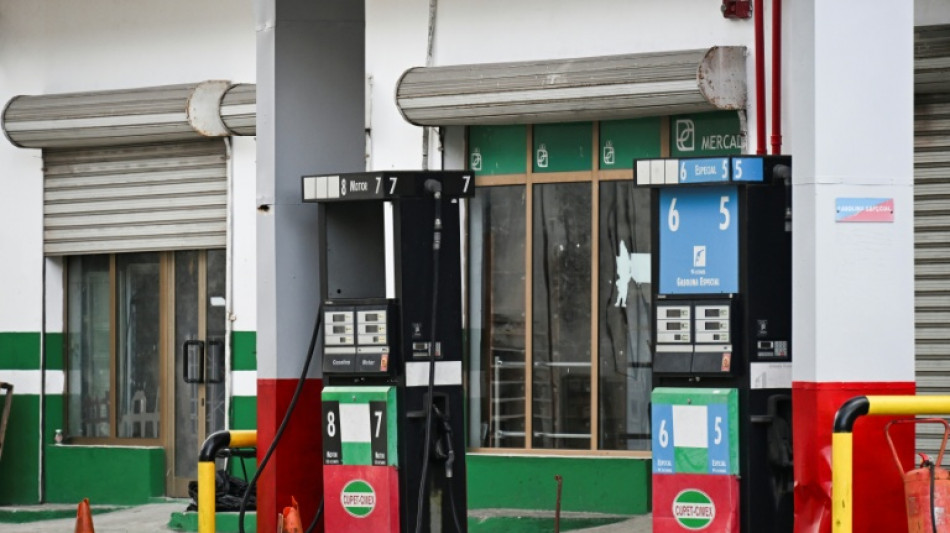
Cuba adopts urgent measures to address energy crisis: minister / Photo: YAMIL LAGE - AFP
The Cuban government on Friday announced emergency measures to address a crippling energy crisis worsened by US sanctions, including the adoption of a four-day work week for state-owned companies and fuel sale restrictions.
Deputy Prime Minister Oscar Perez-Oliva Fraga blamed Washington for the crisis, telling Cuban television the government would "implement a series of decisions, first and foremost to guarantee the vitality of our country and essential services, without giving up on development."
"Fuel will be used to protect essential services for the population and indispensable economic activities," he said.
Among the new measures are the reduction of the working week in state-owned companies to four days, from Monday to Thursday; restrictions on fuel sales; a reduction in bus and train services between provinces; and the closure of certain tourist establishments.
School days will also be made shorter and universities will reduce the requirement of in-person attendance.
These measures are intended to save fuel in order to promote "food and electricity production" and enable "the preservation of fundamental activities that generate foreign currency," said Perez-Oliva Fraga.
The island of 9.6 million inhabitants, under US economic embargo since 1962, has been mired in a severe economic crisis for six years.
Washington has increased pressure on its communist government in recent weeks.
The United States cut off oil deliveries from Havana's key ally Venezuela following its ouster of President Nicolas Maduro in early January.
US President Donald Trump also signed an executive order last week allowing his country to impose tariffs on countries selling oil to Havana.
Trump said that Mexico, which has been supplying Cuba with oil since 2023, would stop doing so -- under threat of US tariffs.
The oil shortages have threatened to plunge Cuba into complete darkness, with power plants struggling to keep the lights on.
Washington has long sought to overthrow or weaken the communist-led Cuban government.
Havana accuses Trump of wanting to "strangle" the island's economy, where power cuts and fuel shortages, already recurrent in recent years, have become even more acute.
This week, Cuban President Miguel Diaz-Canel said his country was willing to hold talks with the United States, but not under pressure.
He said any talks must take place "from a position of equals, with respect for our sovereignty, our independence and our self-determination" and without "interference in our internal affairs."
A.C.Netterville--NG