Sidersa’s $300M Green Steel Plant in Argentina Begins Construction Under RIGI Regime
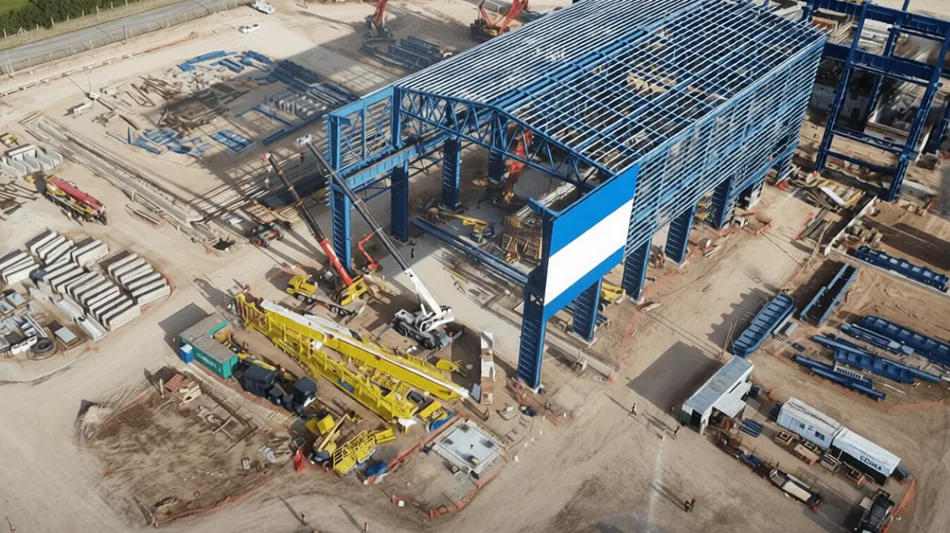
Sidersa has commenced construction on a US$300 million steelworks in San Nicolás de los Arroyos, marking the first industrial project to benefit from Argentina’s Large Investment Incentive Regime (RIGI). The facility aims to produce 360,000 tonnes of low-carbon steel annually by late 2027, utilizing electric arc furnaces powered initially by the national grid.
A US$300 million steel manufacturing facility is taking shape in San Nicolás de los Arroyos, a riverside town in northeast Argentina with a long history of industrial activity. The project, led by the Argentine company Sidersa, represents the first industrial initiative to utilize the country’s Large Investment Incentive Regime (RIGI), a legislative framework designed to attract large-scale capital through tax benefits and regulatory stability guarantees.
The plant is scheduled to begin operations in late 2027, with an annual production capacity of 360,000 tonnes of low-emission steel. This output would mark Sidersa’s entry into primary steelmaking, a sector the company has previously avoided by focusing on the marketing and distribution of finished steel products. The company has pledged to generate more than 300 direct jobs and 3,500 indirect positions within the community.
The facility’s design centers on electric arc furnaces that process recycled scrap metal, a method Sidersa describes as essential for producing the "green" steel it believes global markets will demand. According to data from the Inter-American Development Bank (IDB), electric arc furnaces accounted for approximately 57% of Argentina’s steel production in 2023. The company states that this production method reduces carbon emissions by roughly 70% compared to conventional coal-fired blast furnace processes, which are responsible for a significant portion of the global industrial sector's 7-9% share of CO2 emissions.
However, the environmental profile of the steel produced depends heavily on external factors. The plant will initially draw power from Argentina’s national high-voltage grid, which is currently dominated by gas-fired thermal power stations. While variable renewable energy sources such as wind and solar met 18.9% of the country's electricity demand in 2025, and large hydroelectric plants push that figure above 40%, the grid infrastructure faces capacity constraints.
Adrién Sergenty, an engineer and political scientist specializing in energy policy, noted that the Argentine electricity grid has been saturated for over a decade. He stated that Sidersa will need to decide whether to construct its own renewable energy facilities or partner with nearby generators to guarantee a direct supply of clean power, as reliance on the current grid limits the "green" credentials of the steel.
The availability of raw materials also presents challenges. The global scrap metal market is experiencing shortages and increasing export restrictions. Alejandro Galdeano, the steelworks manager at Sidersa, told Dialogue Earth that surveys indicate sufficient domestic scrap availability to supply the plant 100%. To facilitate this, Sidersa is developing a supply plan involving large suppliers and collaboration with local authorities to establish collection points for communities.
Despite these logistical plans, the project faces scrutiny regarding its environmental impact and economic viability. Construction work has proceeded despite an ongoing legal dispute initiated by the NGO United for Life and the Environment (UPVA). The organization accused Sidersa of causing "enormous environmental damage" through the illegal extraction of tosca, a foundation material, from a quarry near the Ramallo stream without proper authorization. Sidersa’s director of institutional relations, Lucrecia Payer, stated that the company is responding to the lawsuit through legal channels and maintains that the extraction was conducted legally under contracts with authorized quarries in Buenos Aires.
The financing structure for the project reflects a shift away from traditional international development banks. Sidersa initially sought funding from IDB Invest and the World Bank Group’s International Finance Corporation, but those agreements did not materialize. Instead, the company self-financed two-thirds of the investment and secured a US$100 million loan from ICBC Argentina, the local subsidiary of the Chinese state-owned Industrial and Commercial Bank of China. This loan is facilitating the purchase of imported machinery for the facility.
The project’s eligibility for the RIGI regime has drawn criticism from policy analysts. Approved in 2024, the law offers tax incentives and regulatory stability for up to 30 years to investors in a country with a history of economic turbulence. Guido Zack, director of economics at the think-tank Fundar, argued that the scheme grants significant benefits to large corporations without mandating specific conditions such as environmental safeguards or local supplier development. He cited countries like Chile, Brazil, and Norway as examples where similar schemes require clear commitments regarding production targets and renewable energy usage.
Industry experts have also questioned the economic feasibility of reaching Sidersa’s projected production levels. A steel expert consulted by Dialogue Earth, who requested anonymity, suggested that achieving the planned scale would require "some sort of miracle," potentially necessitating extraordinary growth in local demand or a loss of market share by international competitors such as Acindar, Sipar Acero, or Acerbrás.
While Sidersa aims to eventually export to jurisdictions with strict environmental standards like the European Union, which has implemented the Carbon Border Adjustment Mechanism, current production is focused on the domestic market. The company expects the first steel production to occur in the first half of 2028, with construction reported as 27% complete as of September.
Local residents remain cautious regarding corporate promises, citing the history of the General Savio steelworks complex operated by Ternium Argentina. In 2023, an expert report highlighted legal violations at that site, including unpermitted discharge of industrial liquid effluents and the presence of heavy metals in local groundwater. As Sidersa moves forward, the success of its low-carbon model will depend on its ability to navigate these technical, financial, and regulatory complexities.
S.Dennehy--NG