Chernobyl refugee town welcomes Ukraine's conflict displaced / Photo: Genya SAVILOV - AFP
Slavutych was built as a Soviet paradise for refugees from the Chernobyl nuclear disaster but now it is being born again as a haven for people escaping Russia's invasion of Ukraine.
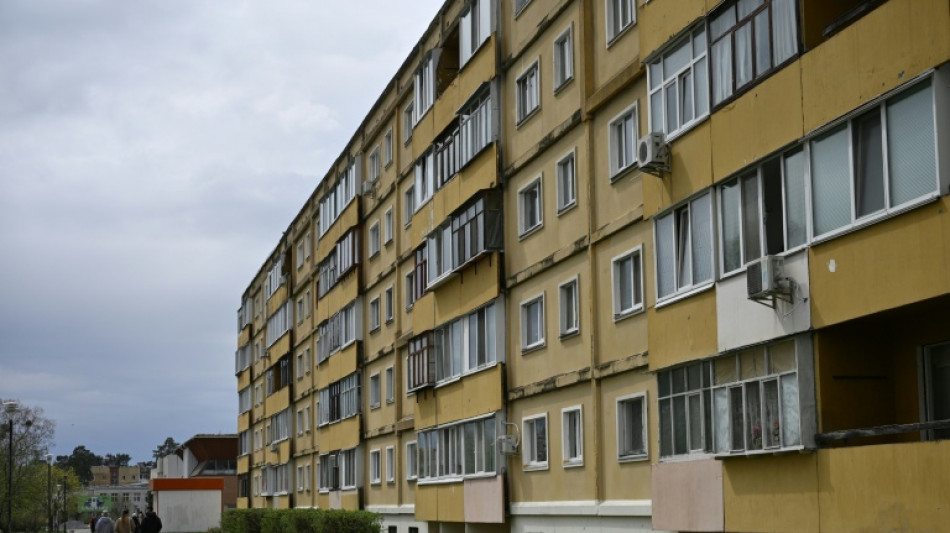
With is massive theatre, stadium, schools, hospital and rows of identical concrete apartment blocks, Slavutych was the perfect example of the Soviet Union's ideal of "friendship of the peoples".
After the Chernobyl reactor exploded on April 26, 1986, workers and architects from the eight Soviet republics -- Estonia, Lithuania, Latvia, Georgia, Armenia, Azerbaijan, Ukraine and Russia -- took part in the construction carried out at breakneck speed.
Hundreds of thousands of people in Ukraine, Belarus and Russia had to leave their homes as Chernobyl's radiation spread across Europe after the world's worst nuclear accident.
The population of the town of Prypyat, the town near the Chernobyl reactor where most of its workers lived, was mainly sent to Slavutych.
"All the residents aged over 39 are internally displaced," Slavutych mayor Yurii Fomichev told AFP.
But the collapse of the Soviet Union in 1991 and the final closure of Chernobyl in 2000 saw many of Slavutych residents lose their job, and hope. Most decided it was best to leave.
- Soviet welcome -
Now there are only about 20,000 people in a town designed to take 50,000. Some buildings in Slavutych were left to abandon, until Russia decided to invade in 2022.
Some 1,265 of the population moved to the town in northern Ukraine because of the war, according to Mykola Kalachnyk, the administration head of the Kyiv region that includes Slavutych. That, however, is just a fraction of the 3.7 million people that the United Nations says has been displaced by the Russian onslaught.
Russian forces even occupied Slavutych for a few days in March 2022 but left when Kyiv's forces ousted them.
"Here the people have been through so much and they understand us," said Olga, a 50-year-old who lives in the town with her elderly, handicapped mother.
Four years ago, Olga, who only gave her first name, was forced to flee the town of Enegodar that was home for workers of another Ukrainian nuclear power station at Zaporizhzhia. The Zaporizhzhia plant, Europe's biggest civilian nuclear power complex, remains in Russian hands.
Olga and her mother spent 18 months living with another family in the town of Zaporizhzhia before arriving in Slavutych in 2024. She has been given a brand new apartment.
According to the UN refugee agency UNHCR representative in Ukraine, Bernadette Castel-Hollingsworth, every family in Ukraine has been "touched" in some way by the displacement of the war.
A children's nursery and part of a hospital have been renovated, with help from the government and the United Nations, and turned into apartments for the displaced.
Kateryna Romanenko, 40, left the devastated city of Bakhmut, in the Donetsk region, just before it was captured by the Russians in 2023.
Romanenko is delighted by her Slavutych home which she called her "most positive" experience of the past four years. She pays no rent, just for power and services.
But Olena Tolstova, 74, said she is feeling the pain of the war turmoil.
"I want to go home," said the retired pharmacist, who pines for her apartment in Energodar and small country dacha house in the countryside.
Tolstova, a widow, is living in hospital dormitory in Slavutych, after spending several months at the home of a friend who had worked at Chernobyl.
Despite wanting to leave Slavutych, she acknowledged that she had been helped under the Soviet principle of "friendship of the people".
M.Scott--NG