French high-speed train slams into truck, killing TGV driver / Photo: Sameer AL-DOUMY - AFP
A French high-speed train crashed into a truck carrying a military vehicle in northern France on Tuesday, killing the driver of the TGV and badly injuring two people, officials said.
The truck driver was taken into police custody after the train, which was travelling from the northern city of Dunkirk to Paris and carrying 243 people, collided with the vehicle at a level crossing in the town of Bully-les-Mines.
The impact was so strong that the military vehicle weighing several dozen tonnes that was aboard the truck was sent flying about 10 meters (yards), landing near a private garden.
The 56-year-old train driver, described by officials as an experienced professional, died instantly, said local prosecutor Etienne Thieffry.
Two people were badly injured, although their lives were not in danger, Thieffry said. Fourteen others sustained less-serious injuries.
The collision occurred at 6:48 am (04:48 GMT) when the train was moving at an estimated speed of 160 kilometres (99 miles) per hour.
The train continued for several hundred metres before coming to a halt on the tracks, regional prefect Francois-Xavier Lauch told reporters.
- 'Huge bang' -
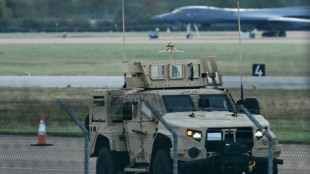
The civilian truck was transporting an obstacle‑crossing vehicle that had been used in exercises in Belgium, a military source told AFP. The truck was due to return it to the western town of Angers.
The lorry driver was in police custody on suspicion of manslaughter, prosecutors said. It was too early to say whether or not he forced his way through the level crossing.
"I was just waking up when I heard a huge bang", said a witness to the crash, Pierre-Francois Dhoossche, 22.
He said he went straight to the scene and saw the truck driver "looking a bit shaken", adding that the rear of the trailer had been struck by the train.
Laurent Poissant, the mayor of the nearby town of Mazingarbe, said the train had "fortunately" not been travelling at its maximum speed.
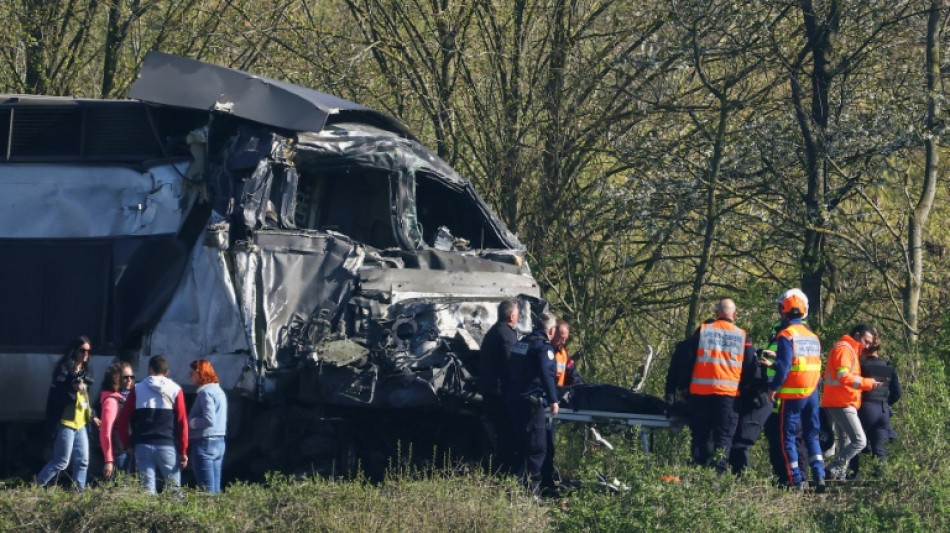
More than 80 firefighters and dozens of police and other personnel were deployed at the crash site, where teams were seen inspecting the mangled nose of the train.
The chief executive of national rail operator SNCF, Jean Castex, said the level crossing was in order.
Rail traffic was to be suspended on the line for "at least a week", he said.
- Level crossing accidents -
"Railway workers are in shock following this tragic accident," the Sud-Rail trade union posted on X.
The union's Fabien Villedieu said it was the "second special convoy in a week to become stuck at a level crossing".
France has around 15,000 such crossings.
In 2024, 89 accidents involving level crossings were recorded in France, according to railway manager SNCF Reseau. Twenty of them were fatal.
On March 25, a regional train collided with a truck at a level crossing in the southeastern town of Saint-Raphael, killing the 60-year-old truck driver.
In March 2025, two soldiers died after their vehicle was struck by a regional train at a level crossing near the northern town of Arras.
In France, serious accidents involving high-speed trains are rarer.
A high-speed train in November 2015 derailed after taking a corner much faster than the recommended speed during a test between Paris and the eastern city of Strasbourg, killing 11 people.
It was the deadliest such accident involving a high-speed train in France.
On Christmas Eve 2024, a high-speed train driver with personal troubles killed himself by throwing himself out of the train while it was moving. An automated response brought the train to a halt and no one else was hurt.
France's first high-speed train, or Train a Grande Vitesse (TGV), shattered world speed records when it came into service in 1981.
The first generation of the TGV reached a top speed of 380 kilometres per hour, cutting the journey time between Paris other French cities to just a few hours, as opposed to the full-day, or even overnight, trip required previously.
kau-adr-cnp-mra-etb-as/ah/jhb
M.Sullivanv--NG